
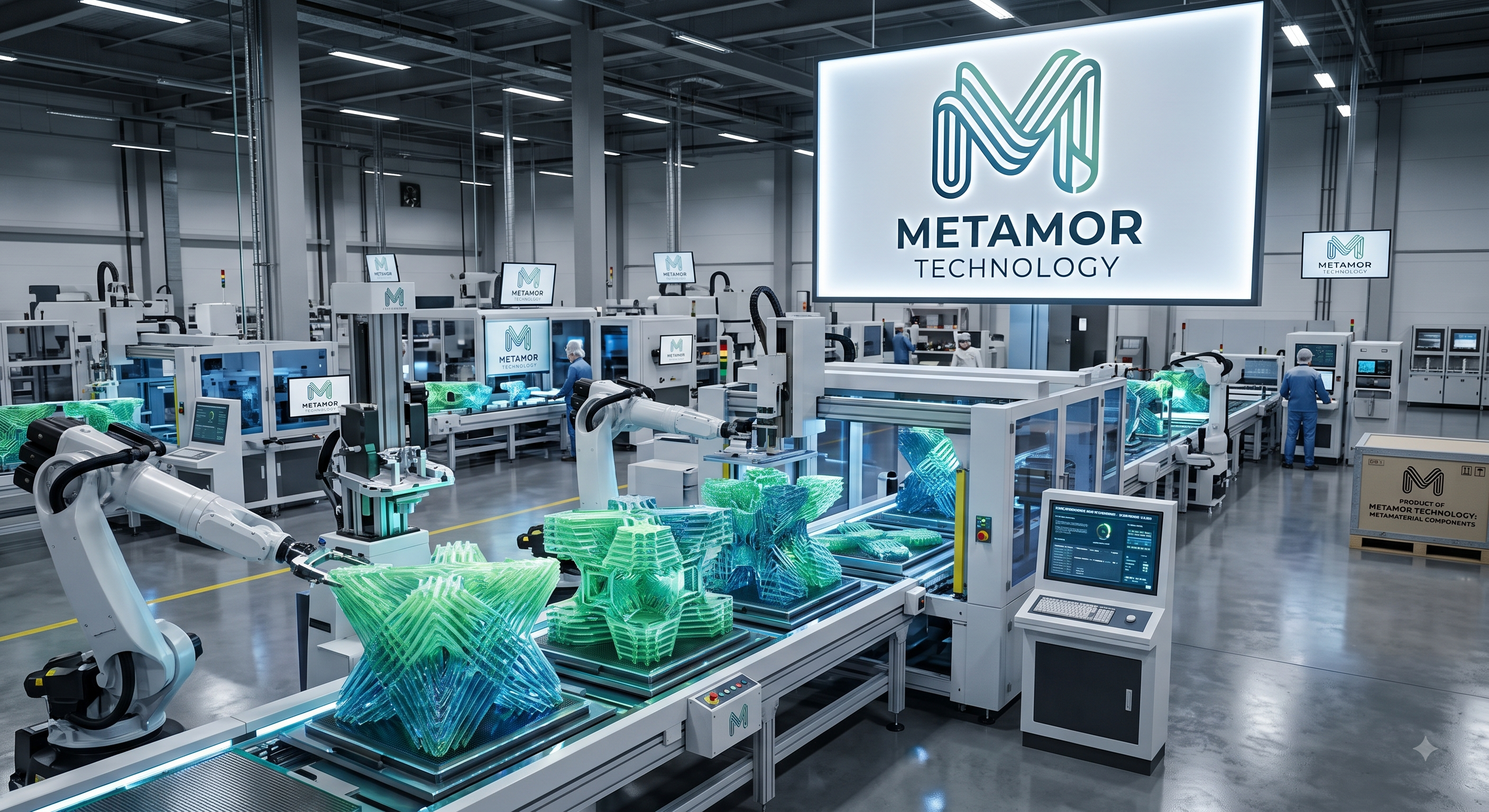
What Is a Production Management System and How Does It Track Manufacturing Stages?
A production management system is software that records and monitors every stage a product moves through during manufacturing — from raw material issue to each processing step to final finished goods — capturing what happened, who or what performed it, and how long it took, so a business has a real, data-based picture of its production process instead of relying on assumptions.
Metamor's system maps your production process into defined, trackable stages — for example, cutting, machining, assembly, quality check, and packing — and records the actual start time, end time, and responsible operator or machine for each one, for every production run.
Can Software Track How Much Time Each Production Stage Takes?
Direct answer: Yes — this is the core function of Metamor's system. Every defined production stage is timed automatically, from the moment work begins to the moment it's handed to the next stage, giving you an accurate, stage-by-stage breakdown of where time is actually going in your production process.
What Stage-Wise Time Tracking Shows You
- Time taken at each individual stage — cutting, forming, assembly, inspection, packing, or however your process is structured
- Comparison across production runs — is stage 3 consistently slower than it should be, or was today an exception?
- Comparison across shifts, operators, or machines — where the real variation in speed is actually coming from
- Idle time vs active time at each stage, separating genuine processing time from waiting, setup, or handover delays
- Total lead time per product, built from the sum of actual stage times, not an estimate
Why This Matters
Without stage-wise time data, "reducing production time" is a guess — you might speed up a stage that was never the real bottleneck. With accurate timing data, you can see exactly which stage is actually slowing the whole process down, and focus improvement effort where it will make a real difference.
How Do I Reduce Manual Work and Human Error on My Factory Floor?
Direct answer: Manual work and human error on the shop floor are reduced by replacing manual data entry and paper-based tracking with automatic data capture — through IoT sensors on machines, barcode/QR scanning at each stage, and AI-based exception detection — so operators spend time on production, not on logging what they did.
Where Manual Effort Typically Gets Reduced
- Stage completion logging — instead of an operator writing down start/end times on paper, a scan or an IoT sensor signal logs it automatically
- Material issue and consumption tracking — recorded automatically as material moves through defined stages, instead of manual register entries
- Quality check recording — pass/fail and defect data entered once at the point of inspection, feeding directly into reporting instead of a separate paper QC log
- Shift and output reporting — automatically compiled from actual stage data instead of a supervisor manually totaling numbers at the end of each shift
- Exception detection — AI flags unusual patterns (a stage taking much longer than normal, a machine running outside expected parameters) instead of requiring someone to notice it by eye
The goal is not to remove people from the shop floor — it's to remove the repetitive, error-prone logging and reporting work, so supervisors and operators can spend their attention on actual production and problem-solving.
What Is IoT Integration in a Manufacturing Management System?
Direct answer: IoT (Internet of Things) integration connects physical devices — machine sensors, PLCs, RFID readers, and other shop-floor equipment — directly to your production management software, so data like machine status, cycle counts, and stage completion is captured automatically in real time, without a person manually entering it.
Can IoT Sensors Connect Machines Directly to Production Software?
Yes. Depending on your existing machinery and its available interfaces, Metamor can connect:
- Machine sensors and PLCs — to capture machine run/stop status, cycle counts, and operating parameters automatically
- RFID or barcode readers at each stage — to automatically log when a batch, component, or job card moves from one stage to the next
- Environmental sensors — for temperature, humidity, or other conditions relevant to sensitive production processes
- Andon/alert devices — so a machine or line can automatically signal a stoppage or issue to the system without waiting for a supervisor to notice
- Handheld and mobile scanning devices — for stages where full machine-level IoT isn't practical, operators can still log stage completion in seconds via scan instead of paper
What This Enables
- Automatic stage timing — no manual stopwatch or paper log required
- Real-time machine status visibility — know immediately if a machine is running, idle, or down, instead of finding out at the next walk-through
- Automatic downtime capture — the system records exactly when and for how long a machine was down, which is the foundation for accurate OEE calculation (see below)
The right IoT integration depends on your existing machines' age, interfaces, and connectivity. Older machinery without digital interfaces can often still be connected through retrofit sensors — this is assessed during the discovery phase.
What Is Agentic AI in Manufacturing and Production Management?
Direct answer: Agentic AI in manufacturing means the system actively monitors production data — stage timing, machine status, quality results — and takes a predefined action on its own when something falls outside normal range, instead of waiting for a supervisor to notice during a manual review. Explore the full Agentic AI Platform.
Agentic AI Automations Metamor Can Build for Your Production Line
- Automatic delay alerts — if a stage is taking significantly longer than its historical average, the system notifies the relevant supervisor automatically
- Automatic downtime escalation — if a machine stops for longer than a defined threshold, the system can automatically notify maintenance staff and log a service request
- Quality exception flagging — a spike in defect rate at a particular stage or shift is flagged automatically instead of being noticed only at month-end review
- Automatic maintenance scheduling — service tasks can be triggered based on machine run-hours or cycle counts rather than a fixed calendar date, so maintenance happens when it's actually needed
- Proactive shift/production summaries — sent automatically to production managers without needing to be requested
AI-Assisted Features
- Bottleneck identification — analyzing stage-wise data across many production runs to identify which stage is consistently the limiting factor
- Delay prediction — flagging jobs at risk of missing their target completion time based on current stage progress
- Natural-language production queries — ask "which stage caused the most delay this week" and get an instant answer instead of manually building a report
- OEE and efficiency reporting generated automatically from captured machine and stage data
Where Human Decisions Still Apply
Agentic AI flags, alerts, and drafts — it does not make final production, quality, or maintenance decisions on its own. A supervisor or quality lead still reviews and acts on flagged exceptions, based on the thresholds and rules your business defines.
How Do I Track Machine Downtime and Production Delays Automatically?
Direct answer: Machine downtime and delays are tracked automatically by connecting machine status (via IoT sensors or PLC integration) directly to the system, so every stop, start, and idle period is logged with a timestamp — instead of relying on an operator to remember and report it later.
What Gets Captured
- Planned downtime (scheduled maintenance, changeovers) vs unplanned downtime (breakdowns, unexpected stops)
- Duration and frequency of downtime per machine, per shift, and per line
- Root cause tagging — a quick classification (mechanical, electrical, material shortage, operator unavailable, etc.) logged at the point of downtime
- Impact on stage timing — how much a specific downtime event delayed the overall production run
What Is OEE and Can Software Calculate It Automatically?
Direct answer: OEE (Overall Equipment Effectiveness) is a standard manufacturing metric that combines machine availability, performance, and quality into a single score representing how effectively equipment is being used — and yes, Metamor's system can calculate it automatically from the same stage-timing, downtime, and quality data it already captures.
The Three Components of OEE
Actual run time vs planned production time (affected by downtime)
Actual production speed vs ideal/rated speed
Good units produced vs total units produced
Because Metamor's system already captures stage timing, machine status, and quality check results as part of normal operation, OEE doesn't require a separate manual calculation exercise — it's generated directly from real production data, updated continuously rather than compiled monthly.
Does a Production Management System Include Equipment Maintenance and Service Tracking?
Direct answer: Yes. Metamor's system includes maintenance and service tracking, so machine servicing can be planned based on actual usage (run-hours, cycle counts) rather than a fixed calendar schedule, and breakdowns can be logged, assigned, and tracked through to resolution.
What the Service & Maintenance Module Covers
- Preventive maintenance scheduling — triggered by machine run-hours or cycle counts, not just a generic monthly calendar
- Breakdown/service request logging — automatically created when a machine goes down beyond a defined threshold, or manually raised by an operator
- Maintenance history per machine — a full record of past services, parts replaced, and downtime caused, useful for deciding when a machine needs replacement rather than repeated repair
- Spare parts tracking — linked to Metamor's Inventory Management System, so parts usage is recorded and stock levels are visible
- Technician assignment and job tracking — service requests assigned, tracked, and closed within the same system used for production
Core Manufacturing & Production Management Modules We Build
Defined process stages with automatic start/end time capture.
Sensors, PLCs, and readers connected directly for automatic data capture.
Planned and unplanned downtime logged automatically with root-cause tagging.
Automatically calculated from captured production data.
Pass/fail and defect data recorded at each relevant stage.
Raw material issue and usage tied to production stages.
Usage-based scheduling and breakdown tracking.
Delay alerts, downtime escalation, and maintenance triggers.
Live shop-floor visibility for supervisors and management.
Controlled access and full history across every module.
Connects with Metamor's Inventory Management System and ERP for material and finance visibility.
Metamor's Production System vs Manual Tracking vs Standard Manufacturing Software
| Factor | Manual / Paper-Based Tracking | Standard Off-the-Shelf Manufacturing Software (MES) | Metamor's Custom Production Management System |
|---|---|---|---|
| Stage-wise time data | Rarely tracked accurately, dependent on manual logs | Available, but often rigid stage definitions that don't match your actual process | Built around your actual production stages |
| Machine/IoT integration | None | Often available, but expensive and complex to implement | Scoped to your actual machines, phased if needed |
| Downtime tracking | Manual, frequently underreported | Available, generally accurate | Automatic, tied directly to IoT/machine data |
| OEE calculation | Manual spreadsheet exercise, often monthly | Usually included | Automatic and continuous, from the same captured data |
| Maintenance scheduling | Calendar-based, often reactive | Usually included, but as a separate costly module | Usage-based, integrated with the same platform |
| Setup cost | Low upfront, high hidden cost in inefficiency and downtime | Often very high, enterprise-level licensing | Modular — pay for what you need now, expand later |
| AI / automation | None | Rare, often a costly premium tier | Included — bottleneck detection, delay prediction, agentic alerts |
| Best suited for | Very small operations only | Large factories with big budgets and standardized processes | Small to mid-size manufacturers who need real stage-level visibility without enterprise MES cost |
Where Metamor's Manufacturing & Production Management System Is Used
Discrete Manufacturing (Parts, Components, Assemblies)
Stage-wise tracking through cutting, machining, assembly, and inspection, with IoT-connected machines capturing cycle times automatically.
Process Manufacturing (Chemicals, Food & Beverage, Pharma)
Batch-based stage tracking, with quality checkpoints and environmental sensor integration where relevant to the process.
Textile & Apparel Manufacturing
Stage tracking across cutting, stitching, finishing, and packing, with labor-intensive stages benefiting most from reduced manual logging via scan-based stage completion.
Auto Component & Precision Manufacturing
Tight tolerance quality tracking combined with machine-level IoT data for cycle time and downtime accuracy.
Small & Mid-Size Job Shops
Job-card-based production tracking, where knowing the actual time and cost of each job matters directly for pricing and quoting future work.
Shop-floor tracking vs full ERP: this system is the deep, stage-level production tracker. Need production connected to purchase, inventory & accounting too? See how it fits with our ERP Software.
How Much Does a Custom Manufacturing Management System Cost?
Direct answer: Cost depends on the number of production stages tracked, the extent of IoT/machine integration, and the modules included (maintenance, quality, reporting) — Metamor's modular pricing means a factory can start with core stage-wise tracking and add IoT integration, maintenance management, or advanced AI later.
Can a Small Factory Afford a Production Tracking System?
Yes. A small or mid-size factory doesn't need full machine-level IoT integration on day one. A typical affordable starting point is stage-wise tracking using barcode/QR scan-based logging at each stage, which requires no machine retrofitting — IoT sensor integration and advanced automation can be added in later phases as the value becomes clear from the initial rollout.
Example phased rollout:
Defined Production Stages + Scan-Based Stage Time Tracking + Basic Reporting
Downtime Logging + Quality Check Tracking + Maintenance Request Logging
IoT/Machine Integration for Automatic Data Capture + OEE Reporting
Agentic AI Alerts, Bottleneck Detection & Predictive Maintenance
Frequently Asked Questions
What is a production management system and how does it track manufacturing stages?
It's software that records every defined stage a product moves through during manufacturing, capturing what happened, who or what performed it, and how long each stage took, giving a real data-based picture of the production process.
Can software track how much time each production stage takes?
Yes, Metamor's system times every defined stage automatically, from start to handover, so you get an accurate stage-by-stage breakdown instead of an estimate.
How do I reduce manual work and human error on my factory floor?
By replacing manual paper logging with automatic data capture — through IoT sensors, barcode/QR scanning at each stage, and AI-based exception detection — so operators spend time on production rather than logging what they did.
What is IoT integration in a manufacturing management system?
IoT integration connects machine sensors, PLCs, and shop-floor devices directly to the software, so data like machine status and cycle times is captured automatically in real time instead of manually entered.
Can IoT sensors connect machines directly to production software?
Yes, depending on your machinery's existing interfaces, Metamor can connect machine sensors, PLCs, RFID/barcode readers, and even retrofit sensors on older machines to capture data automatically.
What is agentic AI in manufacturing and production management?
It's AI that monitors production data — stage timing, machine status, quality results — and takes a predefined action automatically, like alerting a supervisor about a delay or triggering a maintenance request, without waiting for someone to notice manually.
How do I track machine downtime and production delays automatically?
By connecting machine status to the system via IoT or PLC integration, so every stop, start, and idle period is logged automatically with a timestamp and, where possible, a root cause.
What is OEE and can software calculate it automatically?
OEE (Overall Equipment Effectiveness) combines availability, performance, and quality into one score. Metamor's system calculates it automatically and continuously from the same stage-timing, downtime, and quality data it already captures.
Does a production management system include equipment maintenance and service tracking?
Yes, Metamor's system includes preventive maintenance scheduling based on actual machine usage, breakdown/service request logging, maintenance history, and spare parts tracking.
How much does a custom manufacturing management system cost?
Cost depends on the number of stages tracked, extent of IoT integration, and modules included. Metamor's modular pricing lets a factory start with core tracking and expand later — a specific quote is provided after a discovery call.
Can a small factory afford a production tracking system?
Yes — starting with scan-based stage tracking (no machine retrofitting required) is an affordable entry point, with IoT integration and advanced automation added in later phases as needed.
Can it integrate with our existing inventory or ERP system?
Yes, this system is built on the same platform as Metamor's Inventory Management System and ERP, so material consumption and finance data connect directly without separate integration work.
How long does implementation take?
This depends on the number of stages, extent of IoT integration, and modules required — a specific timeline is provided after the discovery call, and starting with scan-based tracking generally means a faster go-live than full machine-level IoT from day one.
Talk to Metamor Technology
If you're looking for:
Metamor Technology can map your production process and build a system around exactly how your factory runs.